
Still deploying by FTP or copying files? A realistic path to CI/CD
You do not need a full-time DevOps hire or a complete rewrite to start making deployments safer.
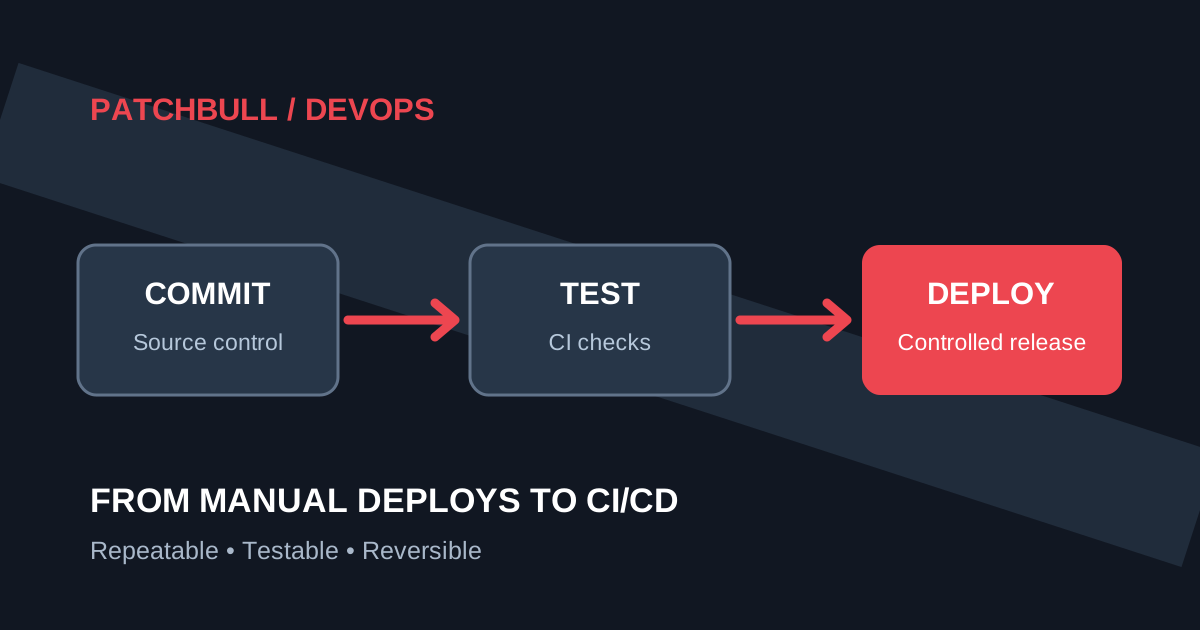
Manual deployment is a business risk, not a personal failure
When production updates depend on one person remembering which files to copy, releases become difficult to audit or repeat. That is especially common in long-running PHP and .NET applications.
The goal of CI/CD is not to adopt fashionable tools. It is to make changes traceable, testable, and reversible.
Begin with source control and recovery
First identify the code that actually runs in production and put a verified copy under access-controlled version control. GitHub, GitLab, and Bitbucket are options, not prerequisites for understanding the existing system.
Document configuration separately from code, protect credentials, and test backup restoration. Do not automatically commit production secrets or customer data.
Introduce one safe deployment path
Create a staging environment, define a build and basic test step, then automate a deployment to staging. Production can initially remain a manual approval step. Add health checks and a rollback procedure before increasing automation.
For legacy systems, it may be safer to automate the current deployment process first and modernize the application in phases.
Do you need an outsourced DevOps team?
If your team can build product features but lacks time for infrastructure, release processes, monitoring, and security maintenance, ongoing external DevOps support may be more practical than hiring a full-time specialist.
The right engagement starts with an inventory and an agreed scope—not a promise to rebuild everything.